Yes. With one difference, and it only shows up later.
woodle.cloud is an electronic lab notebook for academic research groups. It does what you would expect one to do — entries, protocols, images, search, a group that can read each other's work. The difference is what happens to the file underneath, and you won't notice it until somebody asks where a number came from.
- Short answer
- Yes, it's an ELN
- The difference
- The original file stays attached, where it already lives
- Not this
- It is not a LIMS
What an ELN is for
A searchable record in one place instead of four. Entries that survive a laptop dying. A group where the person who joins next year can read what you did this year. Protocols that don't live in one person's head.
This is the category doing its job, and most electronic lab notebooks do it well. If that is all your lab needs, the category is already well served and you do not need us.
The record says aggregate formation fell 41%. Two years on, a reviewer asks which plates, which run, which file. The entry is still there and still readable — but the raw file it came from is on a drive, in a folder named by date, and the connection lived in somebody's memory.
Most notebooks record the sentence. The question that arrives later is about the evidence.
Your files don't move into it.
Most electronic lab notebooks want your data uploaded, so the notebook becomes the place your files live. That works until you leave, or the subscription ends, or a 40 GB microscopy set makes the upload absurd.
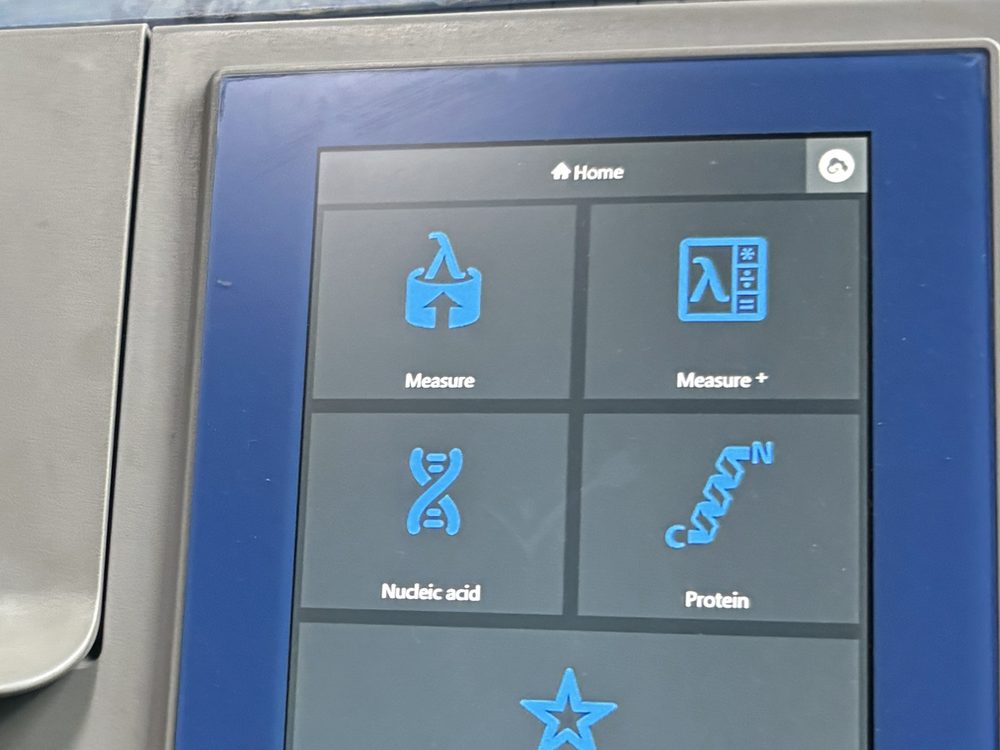
woodle points at the folder your instrument already writes to. Nothing is installed on the instrument PC. The file stays exactly where it is — the shared drive, the departmental server, the drive in the drawer — and the record holds a link to it, along with the run that produced it.
So a result stays attached to its evidence without the evidence having to emigrate. And if you ever stop paying, nothing moves, because linked files were never ours to hold.
An ELN is not a LIMS, and we are not one
These two get compared constantly, usually by people being sold one when they need the other. The distinction is not subtle once it's stated plainly.
It is the record of the work. Experiments, observations, protocols, results, and who did what when. It is organised around the study.
This is what woodle is.
It tracks specimens, chain of custody, plate positions, barcodes, batch state and instrument scheduling at volume. It is organised around the sample.
woodle does not do this, and saying otherwise would waste your time and ours.
If you are comparing free academic plans
Free academic plans are normal in this category — Benchling's is the best known — and they are worth taking seriously. Three things decide which one fits a lab in India.
The comparison most labs are actually making is not with another platform. It is with the notebook already open on the bench. woodle is not trying to replace how you write — it is what keeps the result attached afterwards, which is a different job.
What we don't do
The full register of things we have decided not to say is on what we won't claim, including the five claims we struck and why.
If you are choosing an electronic lab notebook
Three questions worth asking any vendor, including us. They are the ones that decide whether a notebook survives contact with a real lab.
Try it against one study you already finished.
Point it at a project where you already know the answer, and see whether the record holds together better than the version you have now. Free for verified researchers — not a trial, and no card to look around.